Technical Feasibility


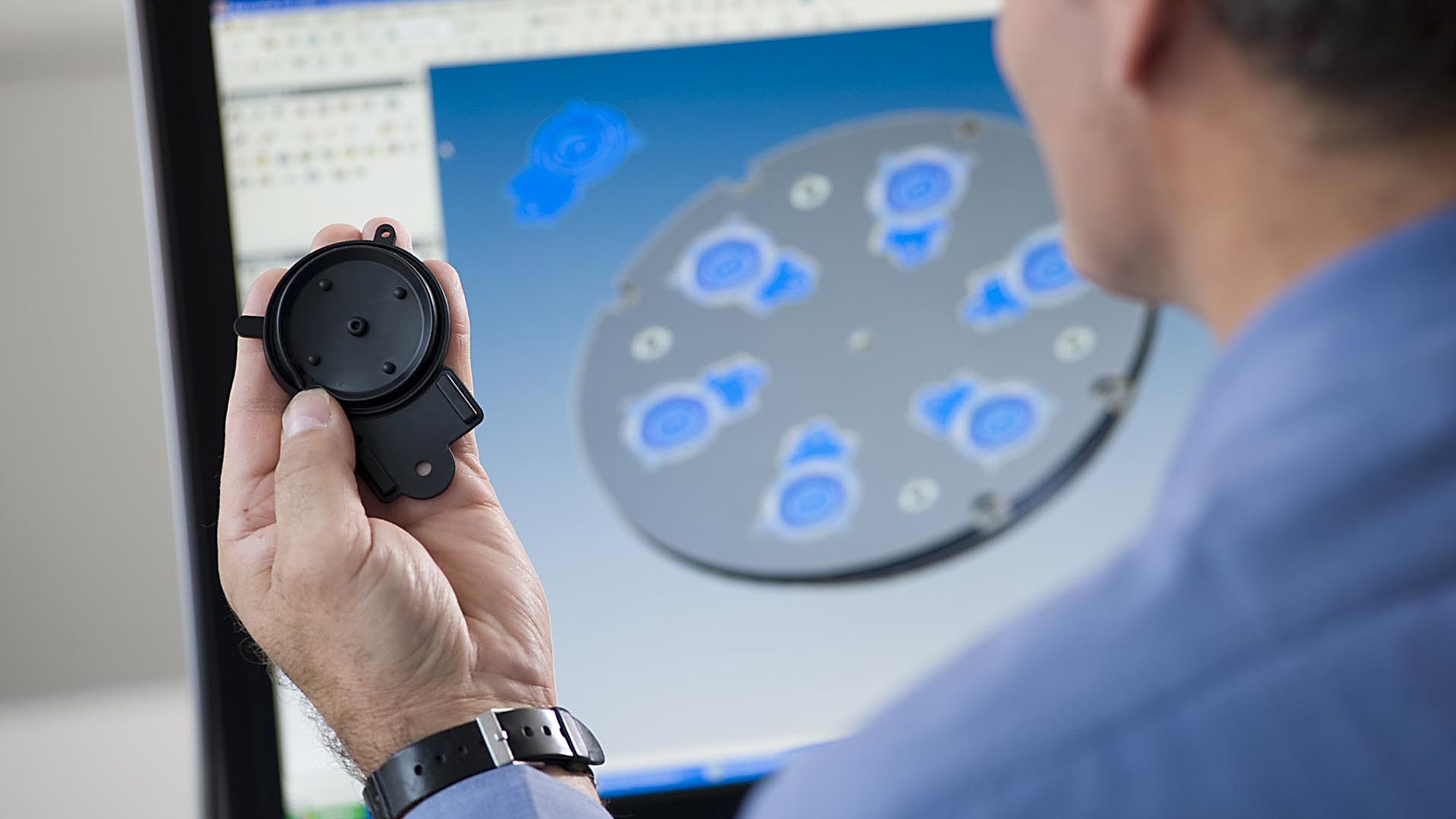
We develop and manufacture custom rubber molded parts – with in-house material expertise, technical part design, and reliable series production.
We structure your project from initial feasibility assessment through to production-ready series – technically validated and fully predictable.
Material, geometry, and operating conditions are evaluated early and defined with precision.
Part design, tooling alignment, and suitability for series production are technically validated.
Processes, tolerances, and repeatability are designed for series production.
Inspection concepts, documentation, and series monitoring ensure consistent component quality
Call-off quantities, buffer concepts, and logistics are aligned to the specific project requirements.
Unclear geometries, incorrect material assumptions, or unrealistic tolerances can lead to costly corrections.
What works in sampling may become unstable in series production – due to process, tooling, or material behavior.
Tooling decisions are difficult to reverse. Mistakes impact time, cost, and delivery capability.
That is why we clarify feasibility, tooling concept, and series capability early – before production begins.
Parts made from a single elastomer compound – without inserts, with a clearly defined functional role within the component.
Molded parts with integrated inserts or bonded counterparts – for additional mechanical or functional requirements.
Not by product category.
We treat rubber molded parts as functional components. Process, tooling design, and inspection are aligned to ensure dimensional accuracy and functional performance remain reproducible in series production.
Media, temperature, friction, and aging are considered early. This ensures that material and geometry fit the application – not the other way around.
The manufacturing process is selected based on part geometry and quality requirements – not internal constraints. This ensures stable performance and cost-efficient series production.
Simple and complex geometries, diaphragms, and custom sealing elements – engineered for media, pressure, and motion profile.
Molded parts with defined functional surfaces, elastic performance, and reproducible characteristics for precise control tasks.
Bonded parts with inserts or mating components – technically engineered and secured at the material and functional interface.
Depending on part geometry, quality requirements, and series logic, we apply different manufacturing processes. What matters is not the process itself, but where it makes technical sense.
CM – Compression Moulding
When Is It Appropriate?
For relatively simple geometries, moderate tolerances, and manageable production volumes.
What Is It Optimized For?
Robust processes, low tooling complexity, and cost-efficient series production.
ICM – Injection Compression Moulding
When Is It Appropriate?
For complex geometries and high requirements in dimensional accuracy, surface quality, and tolerances.
What Is It Optimized For?
High reproducibility, reduced internal stresses in the component, and stable series quality.
IM – Injection Moulding
When Is It Appropriate?
For high production volumes and complex part details.
What Is It Optimized For?
Cycle time, repeatability, and process stability in high-volume production.
TM – Transfer Moulding
When Is It Appropriate?
For molded parts with inserts or large-volume geometries that require uniform encapsulation. Suitable for high shot weights.
What Is It Optimized For?
Reliable integration of inserts, uniform material distribution, and reduced defect rates.
TDI PUR – Low Pressure Hot Casting
When Is It Appropriate?
For large-volume, thick-walled, or highly loaded components with specific mechanical requirements.
What Is It Optimized For?
High component quality, low internal stresses, and long-term performance under load.
Whether an existing component or a new development: the entry point follows your situation, not our process.
If a rubber molded part already exists, we assess feasibility, quality, and supply capability. The objective is a reliable evaluation of whether stability, cost, or supply can be improved.
For new components, we support the technical design through to series readiness. Tooling, material, and process are set up to ensure predictable series production.
You do not need to prepare a full specification. For the initial step, a drawing or sketch, operating conditions, target quantity, and your timeline are sufficient. All further details are clarified in a structured technical alignment.
Quality assurance is an integral part of the series process. Inspection criteria, tolerances, and documentation are defined and monitored on a project-specific basis.
For series requirements, buffer stock and call-off concepts can be agreed. This ensures supply reliability and planning security on a project-specific basis.
Whether an existing component or a new development – we assess technical feasibility and suitability for series production.
Start your technical inquiryA drawing or sketch, operating conditions, target quantity, and a rough timeline. This allows us to assess feasibility, select the process, and define the next steps on a solid basis.
We handle the technical mold design and manage tooling implementation. Tool manufacturing is carried out by qualified partners, technically supervised and approved by us.
Depending on part geometry, quality requirements, and series logic. The specific process is selected on a technical basis, not predefined.
Yes, functional surface treatments can be part of the process depending on the application and are technically defined accordingly.
Through aligned call-off and buffer concepts, as well as clearly defined delivery models tailored to the specific series.

